Common Myths About Dental Implants Debunked
Dental implants have been around long enough that most people have heard of them, but not long enough to escape a fog of half-truths. Some of those myths come from outdated information. Some come from stories passed around by well-meaning friends. Some come from understandable anxiety about any dental procedure that sounds more complex than a filling or crown.
In practice, the gap between what people fear and what actually happens is often wide. Patients walk into consultations expecting a painful, risky, prohibitively expensive process that only works for a narrow group of people. Many leave surprised that the real discussion is more practical than dramatic. It usually comes down to bone quality, gum health, medical history, timeline, and expectations.
Dental implants are not magic, and they are not right for every person or every situation. But they are also far less mysterious than their reputation suggests. Separating the myths from the facts helps people make better decisions, especially when they are comparing implants with bridges or removable dentures.
Why myths about implants persist
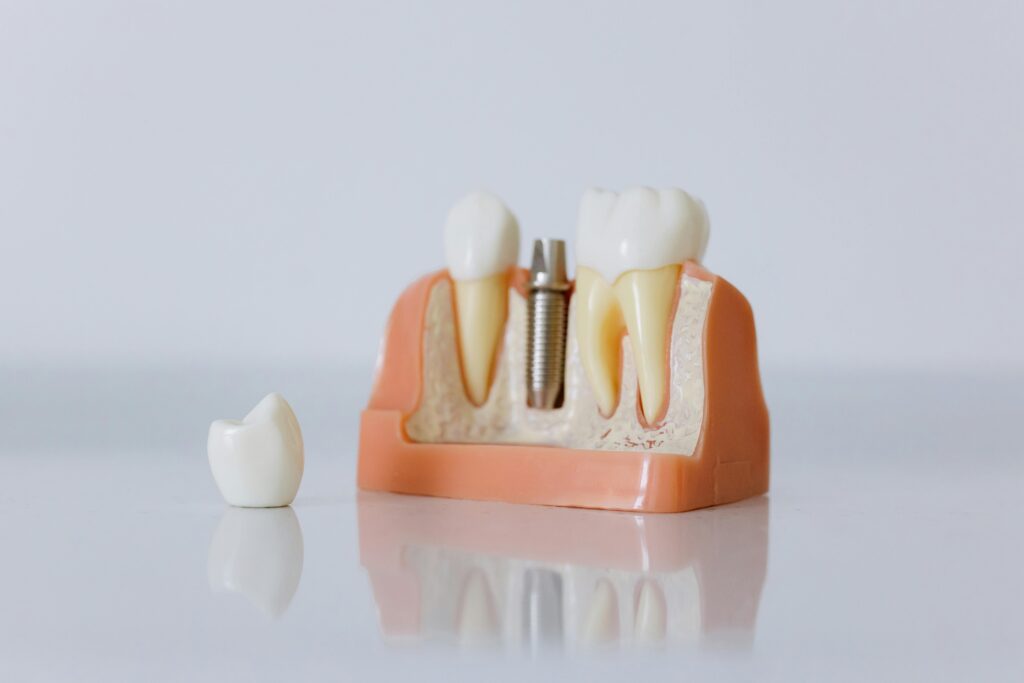
A lot of confusion comes from how the term itself is used. People often say "implant" when they mean the visible tooth, but the implant is actually the titanium or zirconia post placed in the jawbone. The replacement tooth on top might be a crown, bridge, or denture attachment. That distinction matters, because concerns about healing, comfort, appearance, and maintenance can apply to different parts of the system.
Another reason myths survive is that implant treatment is rarely identical from one patient to the next. One person may need only a single implant and crown. Another may need an extraction, bone grafting, several months of healing, and then final restoration. If someone hears a difficult story from a relative, they may assume every implant case is just as involved.
The internet does not help much. Search results often swing between two extremes, fear-based warnings and overly polished marketing. Real treatment sits in the middle. It has clear advantages, specific limitations, and a planning phase that matters just as much as the actual placement.
Myth: Dental implants are extremely painful
This is one of the most common fears, and it keeps many people from even booking a consultation. The word "implant" sounds surgical, and surgery sounds painful. In reality, most patients report less discomfort than they expected.
That surprises people who assume the procedure must feel severe because it involves bone. But the experience is usually more controlled than a difficult tooth extraction. Local anesthesia is highly effective. In some practices, sedation is also available for anxious patients or more involved cases. During the procedure itself, patients typically feel pressure and vibration, not sharp pain.
The first few days afterward are often manageable with a combination of rest, soft foods, and the medications recommended by the dentist or oral surgeon. Swelling can happen. Mild soreness is normal. But the horror-story version, where a patient is incapacitated for weeks, is not the norm for a straightforward implant placement.
There are exceptions. If someone requires multiple implants, sinus lifting, or substantial grafting, recovery can be more noticeable. People who clench or grind their teeth sometimes feel more post-operative tenderness. Smokers may heal more slowly. Even so, pain is usually temporary and predictable, not endless or unmanageable.
A useful comparison is this: the anticipation is often worse than the event. Many patients who postpone treatment for years later say they wish they had done it sooner, mainly because the process was far more tolerable than they had imagined.
Myth: Implants are only for older adults
Missing teeth are often associated with aging, so many people assume dental implants are mainly for retirees. That is not how modern implant dentistry works. Adults of many ages may be good candidates, provided growth is complete and their oral and general health support treatment.
A person in their thirties may lose a tooth because of trauma, a failed root canal, a crack below the gumline, or congenital absence of a permanent tooth. In those cases, an implant can preserve function and appearance for decades. A younger patient may actually benefit greatly because implants help maintain bone and avoid preparing adjacent healthy teeth for a bridge.
Age itself is not usually the deciding factor. Biological age matters more than calendar age. A healthy seventy-five-year-old with good bone and well-managed medical conditions may be a better candidate than a forty-five-year-old heavy smoker with uncontrolled diabetes and active periodontal disease.
This is one of the biggest misunderstandings in implant planning. Dentists are not simply checking whether someone is "young enough" or "too old." They are evaluating healing ability, oral hygiene habits, bite forces, gum condition, medications, and the quality and volume of available bone.
Myth: If you have bone loss, implants are off the table
Bone loss makes implant treatment more complicated, but it does not automatically rule it out. This myth probably comes from an older era, when treatment options were more limited and diagnostic tools were less precise.
When a tooth is lost, the jawbone in that area often starts to shrink over time. That is normal biology. Bone is maintained by stimulation, and once a tooth root is gone, the body may gradually resorb the surrounding bone. If years pass before replacement, the site may no longer have enough width or height for an implant without additional treatment.
That does not mean the case is hopeless. Depending on the location and severity, a dentist or specialist may recommend bone grafting, guided bone regeneration, or in the upper back jaw, a sinus augmentation. These procedures are not minor details, but neither are they rare. They are part of everyday implant planning in many practices.
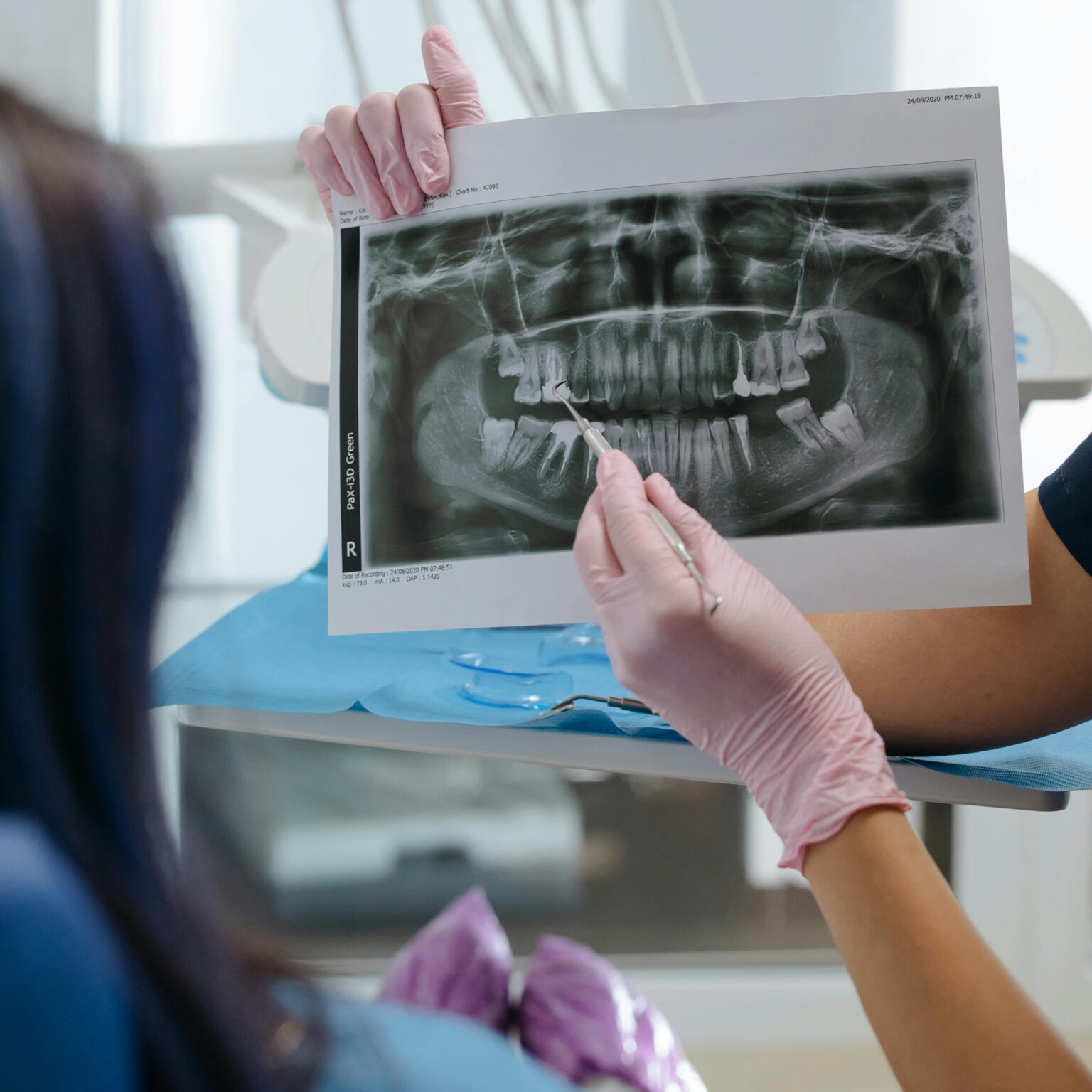
The important point is that candidacy is not a yes-or-no judgment based only on one X-ray. Three-dimensional imaging, especially cone beam CT scans, has changed how clinicians assess bone. A site that looked poor on a basic film may turn out to be manageable with the right approach.
There are still limits. Severe bone loss, certain medical histories, and an unwillingness to undergo added procedures can make implants less practical. But many people who assume they have waited too long are surprised to learn there are still viable options.
Myth: Dental implants look fake
This belief usually comes from confusing well-made implant restorations with poorly made dentures or older crowns that were too opaque, too bulky, or simply the wrong shape. A well-planned implant restoration should blend with the surrounding teeth, not announce itself.
Natural appearance depends on several variables. The implant position matters. The contour of the gums matters. The shade, translucency, and shape of the crown matter. So does the skill of the dentist, surgeon, and laboratory. Anterior teeth, especially upper front teeth, require a particularly careful eye because tiny differences in gum line or tooth angle are easy to notice.
Patients sometimes assume the implant itself determines how natural the final result looks. In reality, the restorative phase often has just as much influence as the surgical phase. A beautifully integrated implant can still look artificial if the crown is poorly designed. On the other hand, a carefully planned case with good tissue support can be difficult for even close friends to identify.
There are cases where perfection is harder to achieve. If a front tooth has been missing for years and the gums have collapsed, rebuilding the ideal architecture can be challenging. If the patient had preexisting gum recession or a high smile line, small asymmetries may remain visible. Honest clinicians discuss those limitations before treatment begins.
Still, the idea that implants inherently look fake is outdated. When done well, they often look more natural than the alternatives.
Myth: Implants require no maintenance
This myth causes real trouble because it leads people to underestimate the importance of long-term care. Dental implants do not get cavities, but that does not mean they are maintenance-free.
The surrounding tissues can still become inflamed. Plaque and tartar can still accumulate. If inflammation progresses, patients can develop peri-implant mucositis or peri-implantitis, conditions that affect the gums and supporting bone around an implant. Left untreated, these problems can threaten the implant's stability.
Daily cleaning matters just as much for implants as it does for natural teeth, and in some cases even more. The shape of the crown, the design of the prosthesis, and the spacing between teeth affect how easy it is to clean around the area. Some patients need floss threaders, interdental brushes, or water flossers to maintain access.
Professional maintenance is also part of the equation. Routine exams allow the dentist to monitor gum health, bite forces, and radiographic bone levels. A crown that is taking too much force can sometimes be adjusted before damage occurs. A patient who grinds their teeth may need a night guard to protect both implants and natural teeth.
The better way to think about implants is this: they reduce some dental risks, but they do not eliminate biology. Healthy habits still matter.
Myth: Implant surgery is dangerous and often rejected by the body
People often hear the phrase "foreign object" and imagine the body fighting the implant the way it might reject an organ transplant. That is not how implant failure usually works.
Most dental implants are made of biocompatible materials, commonly titanium. Rather than being "accepted" in a dramatic immunologic sense, the implant surface is designed to support osseointegration, the process in which bone grows and bonds closely around the implant. This is a well-studied biological process and the foundation of implant success.
When implants fail, the causes are usually more practical than mysterious. Infection, poor bone quality, smoking, uncontrolled diabetes, excessive bite force, poor oral hygiene, or issues with implant positioning are more common reasons than some generalized bodily rejection.
That said, implant treatment is still surgery, and surgery always carries some risk. In the lower jaw, proximity to nerves must be considered. In the upper jaw, sinus anatomy matters. This is why careful planning and appropriate imaging are so important. The danger is not that implants are inherently unsafe. The danger is treating them casually.
Success rates are often high, especially for healthy nonsmokers with good maintenance. But high success does not mean zero complications. Any ethical discussion of Dental Implants should include both truths at once: they are predictable, and they still demand skill and case selection.
Myth: They are too expensive to ever make sense
Implants can be expensive, especially when compared with doing nothing in the short term. That part is true. But the myth is that the sticker price tells the whole story.
A fair comparison needs to include longevity, maintenance, and downstream effects. A traditional bridge may cost less initially than a single implant, but it often requires reshaping adjacent teeth that may otherwise be healthy. If one of those supporting teeth later develops decay, fracture, or endodontic problems, the long-term cost picture changes.
Removable partial dentures can also be less expensive upfront. For some patients, that makes them a reasonable choice. But they can move during eating, place stress on certain teeth, and feel less natural. Some people tolerate them well for years. Others never really adapt.
Implants tend to have higher initial cost because they involve surgery, restorative work, imaging, planning, and often multiple appointments. Yet when they function well over many years, they may offer value that is not obvious from the first estimate alone.
Cost discussions also vary by case complexity. A single implant in a healthy site is one scenario. A case involving extraction, grafting, temporary restoration, and esthetic shaping is another. Patients deserve a breakdown of what they are paying for, not just one large number with no explanation.
One practical way to frame the financial question is to ask not only "What does this cost now?" But also "What does this choice mean for comfort, maintenance, appearance, and future treatment?"
Myth: The process takes forever
Some implant treatment plans do take several months, and it would be misleading to say otherwise. Bone healing is biological, not negotiable. But the assumption that every implant case drags on endlessly is not accurate.
In a simple case, the sequence may be surprisingly streamlined. A tooth is removed or already missing, the implant is placed, healing occurs over a few months, and the final crown is attached. In selected situations, immediate implant placement or immediate provisionalization may be possible, which can shorten the visible treatment gap.
Timing depends on several factors. Infection at the site may require a staged approach. Insufficient bone may call for grafting and additional healing time. Esthetic demands can slow things down in a good way, because rushing a visible front-tooth case can create avoidable problems.
The right timeline is not always the fastest one. This is where patient frustration sometimes collides with sound dentistry. If a clinician advises a longer healing interval, it is often because stability and tissue quality matter more than speed. A rushed implant that fails is slower than a carefully timed implant that succeeds.
Myth: Implants are just a cosmetic treatment
Implants can dramatically improve appearance, but reducing them to cosmetics misses their real function. Teeth are mechanical tools. They maintain chewing efficiency, support speech, preserve spacing, and help distribute bite forces properly.
When a tooth is missing, neighboring teeth may drift or tilt. Opposing teeth may over-erupt. Chewing patterns may shift to one side. Some patients unconsciously avoid certain foods, not because they choose to, but because the area no longer feels reliable. Dental Implants Over time, these small adaptations can affect comfort and oral health.
Implants also help preserve bone in a way removable solutions cannot fully replicate. Because the implant sits in bone like a root substitute, it can help maintain the structure in that area. That does not make implants a cure-all, but it is a functional advantage, not merely an esthetic one.
For full-arch cases, the functional impact can be even more dramatic. Patients who have struggled for years with unstable lower dentures often describe implant-retained solutions as life-changing, not because of vanity, but because they can eat, laugh, and speak without constant fear of movement.
Myth: Anyone offering implants offers the same level of care
This is a myth worth addressing because treatment quality varies. Implant dentistry is not just about placing a screw-shaped device into bone. It involves diagnosis, surgical planning, prosthetic design, gum management, bite analysis, and long-term follow-up.
Some general dentists place implants skillfully. Some refer all surgical phases to specialists and restore the final teeth themselves. Some periodontists and oral surgeons focus heavily on implant placement and complex grafting. The right provider depends on the case and the provider's training and experience.
Patients often do better when they ask specific questions rather than focusing only on price. Useful questions include these:
- How many similar cases have you treated?
- Will 3D imaging be used for planning?
- Who will place the implant and who will restore the crown?
- What happens if grafting is needed?
- How will follow-up and maintenance be handled?
A careful consultation usually feels less like a sales pitch and more like a risk assessment. If a provider glosses over gum disease, smoking, bone volume, or bite habits, that is a warning sign. Good implant planning is detailed because mouths are detailed.
What tends to matter more than the myths
After enough consultations, patterns become obvious. Success is less about dramatic stories and more about fundamentals. Patients with realistic expectations, healthy gums, and consistent home care usually do well. Patients who want a perfect result instantly, ignore maintenance, or hope biology can be negotiated often run into trouble.
Several factors deserve special attention in real-world decision-making:
- gum health before treatment
- smoking or nicotine use
- control of systemic conditions such as diabetes
- the quality and quantity of available bone
- the patient's willingness to maintain the result
These are not glamorous talking points, but they are the details that shape outcomes.
A clearer way to think about Dental Implants
The most useful mindset is neither fear nor blind optimism. Dental Implants are tools. Excellent tools, in the right setting. They can replace one missing tooth without involving adjacent teeth. They can stabilize a loose denture. They can restore function after trauma or advanced dental disease. They can also fail, especially when planning is weak or maintenance is neglected.
If someone is considering implants, the smartest next step is not to rely on a friend’s anecdote or a marketing claim. It is to get a thorough exam, clear imaging, and an honest discussion of alternatives. Sometimes the implant will be the best answer. Sometimes a bridge, partial denture, or no treatment at all may be the more realistic choice for the moment.
That kind of judgment is what good dentistry looks like. Not every myth is malicious. Many are just simplified versions of more complicated truths. Once those truths are laid out plainly, the decision becomes less intimidating and much more personal, which is exactly how it should be.
Oaks Dental
5000 Parkway Calabasas Suite 308
Calabasas, CA 91302, United States
+1 818-431-2000
FAQ About Dental Implants
What is the downside of a dental implant?
Implants require surgery and a healing period that can last several months. Possible complications include infection, nerve or sinus injury, damage to nearby teeth and failure to bond with bone. Your dentist should assess your health, bone support and alternatives before recommending treatment.
What do dental implants typically cost?
There is no single price for every implant case. The number of teeth replaced, implant components, final restoration and any grafting or extractions affect the total. Request a written estimate covering every stage and confirm insurance benefits and out-of-pocket costs with the practice.
How long do tooth implants last?
An implant can provide long-term support and may last a lifetime with good oral hygiene and regular dental care, but this is not guaranteed. The crown or other restoration may need replacement sooner. Smoking, gum disease and some health conditions can reduce implant success.