The Veneers Process in Calabasas CA Step by Step

A beautiful veneer case rarely starts with teeth alone. It starts with a person who is trying to solve something specific. Sometimes it is a chipped front tooth that catches the light in every photo. Sometimes it is worn enamel from years of grinding. Sometimes it is a smile that feels slightly too small, too uneven, or too dark no matter how often the patient whitens. When people ask about Veneers Calabasas CA, they are usually asking a deeper question: what does the process really look like, and how do you know if it is worth it?
The honest answer is that veneers are part cosmetic art, part restorative dentistry, and part planning exercise. They are not a one-visit impulse treatment if done properly. The best veneer cases are measured, conservative, and tailored to the face, bite, and long-term oral health of the patient. In a place like Calabasas, where patients often want natural refinement rather than an obviously “done” smile, that planning matters even more.
If you are considering veneers, it helps to know what happens from the first consultation to the final polish. It also helps to understand where good cases go right, where poor cases go wrong, and what you should ask before committing.
What veneers actually are
Veneers are thin shells, usually made from porcelain or a high-strength ceramic, bonded to the front surface of teeth to improve color, shape, size, and overall symmetry. Composite veneers exist too, and in some cases they make sense, but when people talk about a durable, highly aesthetic smile upgrade, they are usually referring to porcelain veneers.
Porcelain has a few practical advantages. It reflects light in a way that can mimic natural enamel, it resists staining better than composite, and it can hold fine detail at very thin dimensions. That said, veneers are not magic. They work best when the underlying teeth are healthy enough to support them and when the patient’s goals are realistic. Veneers can make a smile brighter and more harmonious. They cannot cure gum disease, stop untreated grinding, or replace thoughtful treatment planning.
Why a careful consultation matters more than most people expect
The consultation is where many veneer cases are won or lost. Patients often come in thinking in broad terms, “I want straighter, whiter teeth,” but veneers are not one-size-fits-all. A skilled cosmetic dentist will look at the whole picture: tooth proportion, lip movement, gum levels, bite relationship, enamel thickness, previous dental work, and habits such as clenching or nail biting.
A common misconception is that veneers are purely cosmetic and separate from function. In practice, function drives longevity. If a patient has a deep bite and heavy wear on the front teeth, placing ultra-thin veneers without addressing the bite can create a beautiful short-term result and a disappointing long-term one. Chipping, debonding, and edge wear often trace back to planning shortcuts.
This first visit is also when the conversation turns practical. How many teeth need treatment? Is whitening first a better idea? Would orthodontics improve the result? Would bonding solve the issue more conservatively? In experienced hands, the right answer is not always veneers. That is often the clearest sign you are getting thoughtful advice rather than a sales pitch.
Step by step, what the veneers process usually looks like
-
Consultation and exam
The dentist evaluates your teeth, gums, bite, photos, and X-rays if needed. This is when goals, limitations, and alternatives are discussed. -
Smile design and planning
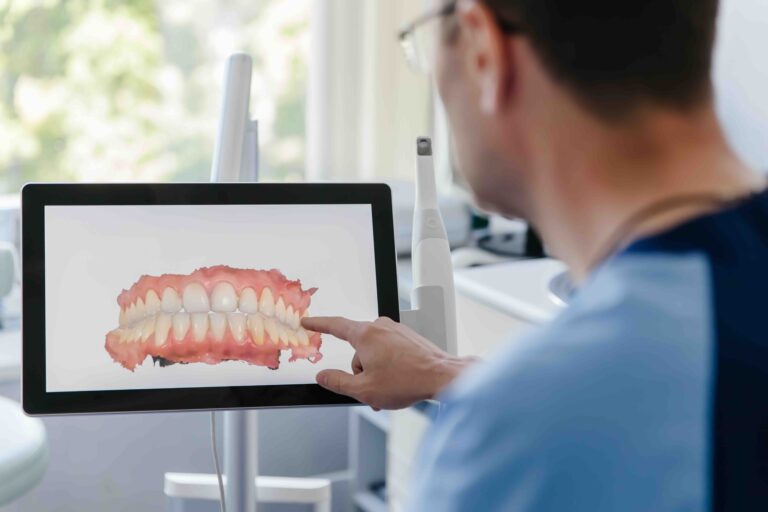
Measurements, photos, and often impressions or digital scans are used to map shape, length, color, and overall smile balance. -
Tooth preparation and temporaries
A small amount of enamel may be reshaped, then temporary veneers are often placed while the final restorations are being made. -
Try-in and bonding
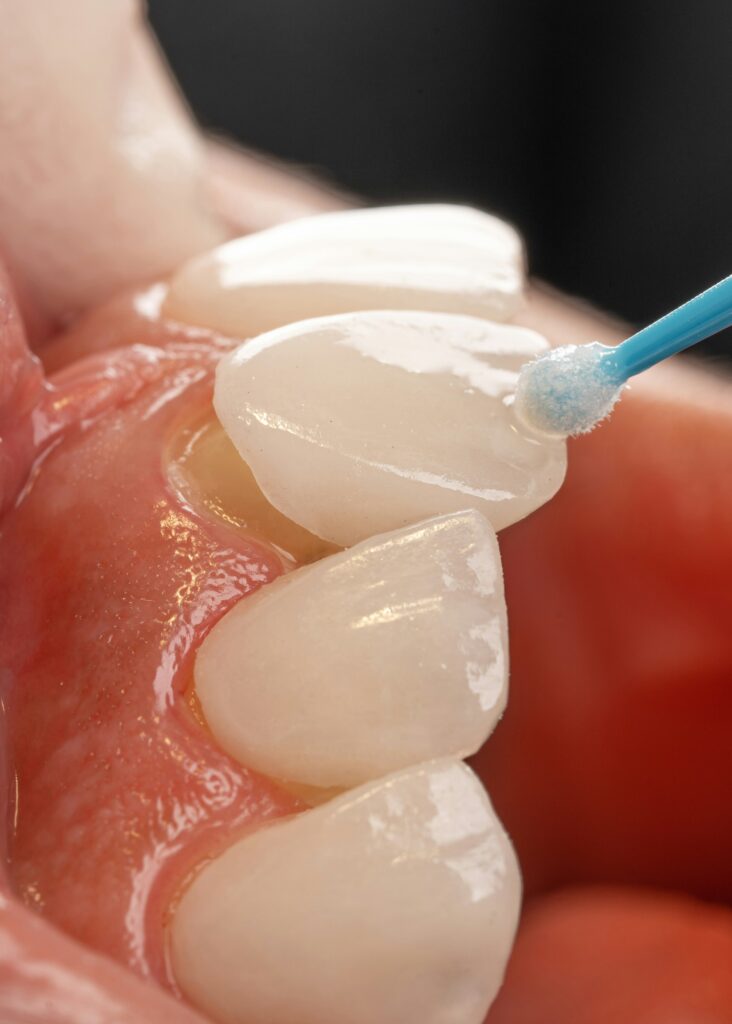
The final veneers are checked for fit, contour, shade, and bite, then bonded to the teeth with careful adhesive technique. -
Follow-up and maintenance
The dentist checks comfort, bite, gum response, and gives instructions on cleaning, protection, and long-term care.
Those five points capture the sequence, but each one involves decisions that affect how natural the result looks and how well it holds up over time.
The records appointment, where the smile starts taking shape
After the consultation, many dentists move into a records or design phase. In modern cosmetic practices, this often includes digital photos from multiple angles, video of the patient speaking and smiling, and either traditional impressions or a digital scan. These records do more than document the teeth. They help the dentist and lab understand how the smile lives in motion.
A tooth that looks the right length in a static photo can appear too long when someone laughs. A very bright shade can look striking under office lights and slightly flat in daylight. These are not minor details. Good veneer cases depend on proportion and personality. A 24-year-old actor, a 42-year-old executive, and a 63-year-old retiree may all want brighter smiles, but the textures, edges, and shade choices that look believable on each of them can differ a great deal.
This is also when smile design comes into play. Some dentists show mockups digitally. Others create a wax-up or a physical model that previews the planned changes. A mockup can be especially helpful for patients who worry about ending up with oversized, opaque veneers. It turns abstract preferences into something visible and discussable. Instead of saying “I don’t want them too big,” a patient can point to the exact issue, maybe the central incisors feel too square, or the canines are too prominent, or the smile arc needs softening.
Deciding how much tooth preparation is necessary
This is one of the most important parts of the process and one that patients often misunderstand. Veneers are usually conservative compared with full crowns, but they are not always prep-free. Some cases need only minimal enamel reshaping. Others require a bit more reduction to create space for the material and avoid bulky contours.
The right approach depends on the starting position of the teeth. If teeth already angle outward or are prominent, trying to place veneers with little to no preparation can produce a puffy, overbuilt look. That is the kind of result people notice for the wrong reasons. On the other hand, aggressively removing tooth structure when a more conservative approach would do is equally problematic.
A good cosmetic dentist aims to stay in enamel whenever possible. Bonding to enamel is generally more predictable than bonding to dentin, and it supports long-term success. This is why small planning decisions matter. Sometimes a short round of orthodontics before veneers allows for less drilling and a more refined result. Patients are occasionally surprised to hear that moving teeth first can be the more conservative path, but in many cases it is.
The preparation appointment, what it feels like and what happens
For many patients, this is the appointment they are most nervous about. In reality, it is usually very manageable. The dentist numbs the area, reshapes the front surface of the selected teeth if needed, and refines the margins so the veneers can fit precisely. The amount of reduction is often measured in fractions of a millimeter, though that varies by case.
Once the teeth are prepared, the dentist takes final impressions or digital scans. Precision matters here. Tiny discrepancies in the impression can show up later as fit issues at the edges, and edge fit is where comfort, aesthetics, and gum health intersect.
Most veneer cases involve temporary restorations while the porcelain is being fabricated. These temporaries do more than fill time. They let the patient test the look and feel of the planned smile in daily life. Can you speak comfortably? Do the front teeth feel too long when you bite into a sandwich? Does the shape feel elegant or too uniform? Good temporaries provide valuable feedback before the final porcelain is bonded.
Patients often learn a lot during this phase. A person who initially wanted a very bright, very uniform Hollywood look may realize they prefer a slightly softer, more natural finish. Another may discover that a tiny length adjustment improves speech. Temporary veneers are not just placeholders. They are part of the design process.
Life with temporaries in the short window before finals
Temporary veneers require a little common sense. They are not as strong as the final porcelain, so biting directly into hard foods can dislodge them. Sticky candy, ice chewing, and aggressive crunching are not good ideas during this phase. That does not mean life stops. It simply means the patient should be aware that these are transitional restorations.
Speech sometimes feels a bit different for a day or two, especially if tooth length or position is changing. Most people adapt quickly. Mild sensitivity can occur as well, particularly with cold drinks, though a well-managed case usually keeps that to a minimum.
This stretch between preparation and final placement often gives patients their clearest sense of whether the overall design suits their face. I have seen patients become much more confident once they stop focusing on the individual teeth and start seeing how the smile fits their expressions. I have also seen the opposite, where a subtle issue becomes obvious only after a few days of real-world wear. That is why a thoughtful temporary phase is so useful.
The laboratory phase, where craftsmanship makes a visible difference
Patients do not always see this part, but it is where exceptional veneer cases separate themselves from average ones. The dental laboratory uses the approved records, scans, photos, and shade information to fabricate the final veneers. If the dentist and ceramist communicate well, the result can be remarkably lifelike.
Shade selection is more nuanced than choosing “white.” It includes value, which is lightness or brightness, chroma, which is saturation, and translucency, which affects depth and realism. Surface texture matters too. Natural teeth are not flat tiles. They have micro-texture that catches light in a subtle way. Too much texture can look harsh. Too little can look artificial. The best veneers sit in that balanced middle ground where they appear polished but alive.
A strong lab partnership is especially important in high-visibility cosmetic markets. Patients seeking Veneers Calabasas CA often care deeply about details that casual observers may not consciously identify, but they still notice. The smile should look healthy and striking, not manufactured.
The bonding appointment, where precision matters most
When the final veneers return from the lab, the bonding appointment begins with a try-in. The dentist checks fit, marginal integrity, color, contour, and how the veneers interact with the bite. In some cases, a try-in paste is used to preview the shade with the cement in place. This matters because the final appearance can shift depending on the underlying tooth color and the bonding material.
If everything looks right, the teeth are cleaned and prepared for bonding. The inner surfaces of the veneers are treated according to the ceramic type, often with etching and a bonding primer. The teeth are isolated carefully, because contamination with moisture can compromise the bond. Adhesive cement is placed, the veneers are seated, and excess material is cleaned before curing.
This is not a fast, casual step. Proper bonding takes patience. Each veneer must be fully seated and aligned, and the bite must be adjusted precisely once they are in place. A veneer that is even slightly heavy in occlusion can be more vulnerable to chipping. A margin that is not cleaned properly can irritate the gums.
When done well, the transformation tends to feel surprisingly seamless. Patients often expect the veneers to feel foreign. Instead, once the bite is adjusted and the lips adapt, the smile typically feels like a refined version of what should have been there all along.
What the first few days are really like
There is usually an adjustment period, but it is often short. The teeth can feel a bit smoother or slightly fuller to the tongue at first. Minor gum tenderness can occur, especially if multiple veneers were placed and the margins were close to the gumline. Most people settle in within a few days.
Speech changes are typically minor and temporary. S sounds and F sounds can feel different right away if the length or position of the front teeth changed. The tongue is remarkably adaptable, and most patients normalize quickly. If a particular sound remains off, a small contour adjustment may solve it.
Sensitivity after bonding varies. Some patients have none. Others notice mild temperature sensitivity for a week or two. Persistent pain is not typical and should be checked.
Situations where veneers may not be the best first step
Veneers are excellent in the right case, but they are not the answer to every cosmetic complaint. If someone has active gum disease, untreated decay, or severe clenching, those issues need attention first. Placing cosmetic restorations on an unhealthy foundation is asking for trouble.
There are also cases where orthodontics, whitening, bonding, or crowns make more sense. A patient with very crowded teeth may benefit from alignment before any cosmetic work. A patient with one dark root canal tooth may need internal whitening, a crown, or a different restorative plan. Someone with extensive existing fillings on front teeth may not be the ideal veneer candidate because the bonding substrate is not mostly intact enamel.
That is why the process should never feel rushed. Veneers reward careful selection and punish shortcuts.
Questions worth asking before you commit
- How many veneers do you recommend, and why that number?
- Will you need to remove enamel, and if so, about how much?
- Can I see a mockup or temporary preview before the final veneers are made?
- How will my bite and grinding habits affect the treatment?
- What kind of maintenance and replacement timeline should I realistically expect?
These questions do more than gather information. They reveal how the dentist thinks. A strong answer is usually specific, balanced, and grounded in your actual anatomy rather than generic promises.
How long veneers last and what affects longevity
Porcelain veneers can last many years, often well over a decade, but their lifespan depends on several variables. The quality of the preparation, the bonding technique, the ceramic chosen, the health of the surrounding gums, and the patient’s habits all play a role.
Night grinding is one of the biggest threats. Even a beautifully bonded veneer can chip under repeated heavy force. For patients who clench or grind, a custom night guard is not an upsell. It is a practical protective tool. Likewise, using teeth as tools to open packaging or tearing through very hard foods can shorten the life of the work.
Maintenance is straightforward but important. Brush with a non-abrasive toothpaste, floss consistently, and keep up with hygiene visits. Veneers do not decay, but the underlying tooth structure still can, especially near the margins if oral hygiene is poor.
Cost, value, and the temptation to cut corners
Veneers are an investment, and patients are right to ask why pricing varies so much. The answer often lies in the details patients do not immediately see: diagnostic planning, preparation skill, quality of temporaries, time spent with the lab, the experience of the ceramist, and the precision of bonding. Those variables affect both the final appearance and the long-term performance.
A lower fee is not automatically a red flag, and a higher fee is not automatically proof of excellence. Still, cosmetic dentistry is one area where bargain shopping can backfire. Replacing poorly designed veneers is often more complicated than doing the case correctly the first time because enamel may already have been removed and the patient’s tolerance for revision is low.
Value in veneers comes from restraint, planning, and craftsmanship. The most successful cases often do not scream for attention. They simply make the face look more rested, balanced, and confident.
What makes a result look natural in Calabasas
There is a particular concern many patients voice in aesthetic communities, and it is a fair one: “I want people to notice I look good, not notice my veneers.” That usually comes down to proportion and finish. Teeth that are too white, too opaque, too identical in shape, or too bulky tend to look unnatural. So do gumlines that are ignored or bite relationships that are forced.
Natural-looking Veneers often have subtle individuality. The front teeth may not be mirror-image clones. Edge translucency may be gentle rather than dramatic. The shade may be bright, but still believable against the patient’s skin tone, eyes, and age. Those details are what separate polished cosmetic dentistry from obvious cosmetic dentistry.
In Calabasas, many patients want a smile that reads healthy, successful, and elegant under every kind of light, from office fluorescents to outdoor sun to phone-camera flash. That is not achieved by picking the whitest shade card tab and hoping for the best. It is achieved by making many small good decisions in sequence.
The process is as important as the porcelain
The final veneers are what people see, but the process is what determines whether the case feels smooth, predictable, and satisfying. A thoughtful veneer journey includes diagnosis, smile design, conservative planning, useful temporaries, expert lab work, and meticulous bonding. If any of https://www.google.com/maps?cid=11247861397590072761 those pieces are weak, the finished smile may still look decent at first glance, yet fall short in comfort, durability, or realism.
For patients exploring Veneers Calabasas CA, the smartest move is not to focus only on before-and-after photos. Ask how the dentist plans. Ask what happens if your bite is heavy. Ask whether a mockup is part of the process. Ask how much natural tooth can be preserved. Those answers tell you far more than a glamorous photo ever will.
A well-executed veneer case should feel intentional from start to finish. The teeth should suit your face, function well, and let you smile without thinking about them. That is the real standard, and it is worth taking the process step by step.
Oaks Dental
Address: 5000 Parkway Calabasas Ste 308, Calabasas, CA 91302
Phone number: +18184312000
FAQ About Veneers Calabasas CA
How much do veneers actually cost?
In the United States, dental veneers generally cost between $250 and $2,500 per tooth, while a full set typically runs anywhere from $6,000 to $25,000. Because the procedure is classified as cosmetic and elective, dental insurance almost never covers it.
How long do dental veneers last?
Dental veneers last a long time, but they are not permanent. They mainly depend on two key types: porcelain veneers and composite veneers. On average, porcelain types last 10 to 15 years, while composite types last 5 to 7 years before they need a fix or a new set.
What is the downside of having veneers?
The main downsides of dental veneers are that the process is permanent, they can cause tooth sensitivity, and they are costly to replace.